Writing pay-per-click (PPC) ad copy that actually works is like catching lightning in a bottle. Businesses need to adapt to stay ahead in the digital world. ChatGPT is a revolutionary tool that can change the way you write ads.
This article outlines the steps to harness AI’s potential to craft compelling PPC ads. By the end, you’ll be equipped with insights to transform your PPC campaigns, ensuring your message cuts through the digital noise and resonates with your audience.
Key Takeaways
- Learn the essential components of effective PPC ad copy
- Discover best practices for crafting ads that resonate with potential customers
- Explore how ChatGPT can enhance your keyword strategy for better targeting
- Master the art of writing attention-grabbing headlines with AI assistance
- Understand the importance of A/B testing to optimize your PPC campaigns
Understanding the Basics of PPC Ad Copy
PPC ad copy serves as the backbone of your online advertising strategy. It’s your digital handshake, the first impression that can make or break a potential customer’s interest in your product or service. In the crowded space of SERP, your ad must stand out with clarity. The goal is to ensure your message resonates with your audience, leading to higher CTR and conversions.
Crafting effective PPC ad copy is not just about stringing together words. It’s about creating a narrative that aligns with the search query and search results, delivering a promise that your business can fulfill. You want each line to be a hook that draws potential customers in and compels them to click and learn more about what you offer.
Engaging ad copy directly influences conversion rates and your advertising quality score. A higher quality score means better ad placements and lower costs per click. A strong call-to-action (CTA) is the linchpin of effective ad copy. The CTA should be clear, concise, and tailored to your target audience, making it irresistible for them to act immediately.
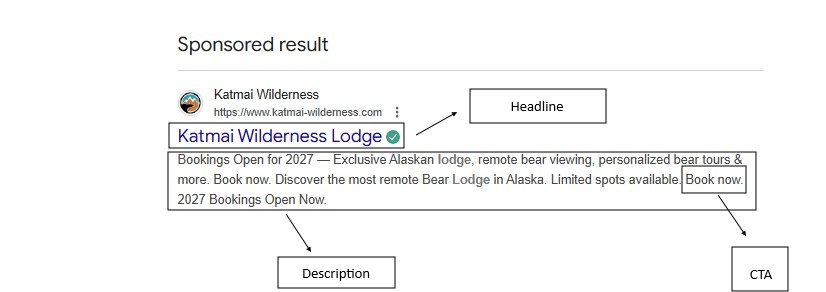
This is an example of a Google Ad copy. An ad copy comprises headlines, descriptions, and keywords.
Best Practices for Crafting Compelling PPC Ad Copy
High-performing ads often focus on the benefits rather than the features of a product or service. Regularly updating your ad copy keeps it fresh and relevant.
Incorporating ad extensions can enhance your ad’s visibility and provide more context to the searcher. These extensions can include additional links, call buttons, or location information, enriching the user experience and increasing the likelihood of a conversion.
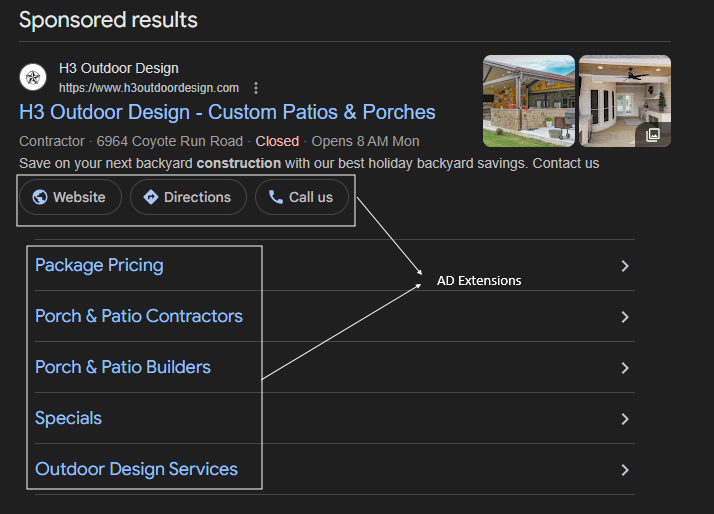
This is an example of a search ad with ad extensions.
Using ChatGPT to Enhance Your Keyword Strategy
ChatGPT is more than just a writing tool; it can help you improve your keyword strategy. ChatGPT helps you stay ahead of the game by coming up with keyword ideas based on market trends and data. A better keyword list means more relevant ads, which improves your search engine performance and gets the most out of your ad budget.
ChatGPT can help with more than just keyword research. It provides insights into optimizing your keywords. Leveraging AI for better keyword research is a strategic move for any digital marketer. It allows you to make data-driven decisions, tailoring your approach to meet the ever-changing demands of search engines and consumer behavior.
Crafting Headlines with ChatGPT
In the world of PPC advertising, a headline is your first and sometimes only chance to grab a potential customer’s attention. ChatGPT can be your secret weapon in crafting headlines that spark curiosity and drive engagement. A compelling headline sets the tone for your entire ad campaign, capturing interest within the limited real estate of a search ad. ChatGPT helps you test different headline variations, allowing you to see which ones resonate best with your audience. ChatGPT’s ability to generate creative and impactful headlines means you’ll always have a fresh pool of ideas to draw from, keeping your ads dynamic and engaging.
Using ChatGPT for creative ad copywriting isn’t just about saving time; it’s about elevating the quality of your ads. By injecting creativity and strategic thinking into your headline writing process, you position your business to stand out in the crowded market and drive meaningful engagement.
How to Craft Effective Prompts
The difference between generic AI-generated copy and high-converting ads lies in your prompt. A well-structured prompt acts as a blueprint that tells ChatGPT exactly what to create, eliminating vague outputs and ensuring your ad copy aligns with your audience, goals, and platform requirements.
| Step | Prompt Component | Why It Converts |
| Audience | Define your target persona | Ensures relevance; AI tailors language to specific pain points and interests |
| Goals | State campaign objectives | Focuses output on measurable outcomes (traffic, leads, sales) aligned with KPIs |
| Product/Service | Highlight USPs & benefits | Crafts compelling value propositions that address specific customer needs |
| Structure | Specify ad format & constraints | Matches platform rules (Google/Meta character limits); avoids generic output |
| Hooks | Add engagement angles | Boosts CTR with proven formats: questions, statistics, or urgency triggers |
| Tone & Trust | Set voice + credibility signals | Builds authenticity; sounds natural rather than sales-oriented |
| Iteration | Refine and optimize outputs | Improves relevance; transforms raw AI copy into performance-optimized ads |
A/B Testing Your Ad Copy for Maximum Impact
A/B testing is a powerful method to determine which elements of your ad copy resonate best with your audience. By running well-structured tests, you gain insights into consumer behavior and preferences, allowing you to make informed decisions that improve overall campaign performance and ROI.
Continuous optimization is key to staying competitive in the digital advertising space. By regularly reviewing and adjusting your ad copy based on A/B testing results, you keep your campaigns fresh and relevant. Ultimately, A/B testing is about more than just improving click-through rates or conversion rates. It’s about understanding your audience better and delivering messages that genuinely connect with them.
How to Create an A/B Testing or Experiment Campaign
A/B testing a campaign is an essential step in achieving the right business goals. Here is a quick guide on creating an experiment campaign.
- Navigate to “Experiments” in the Google Ads sidebar and hit the “+” button to create an experiment.
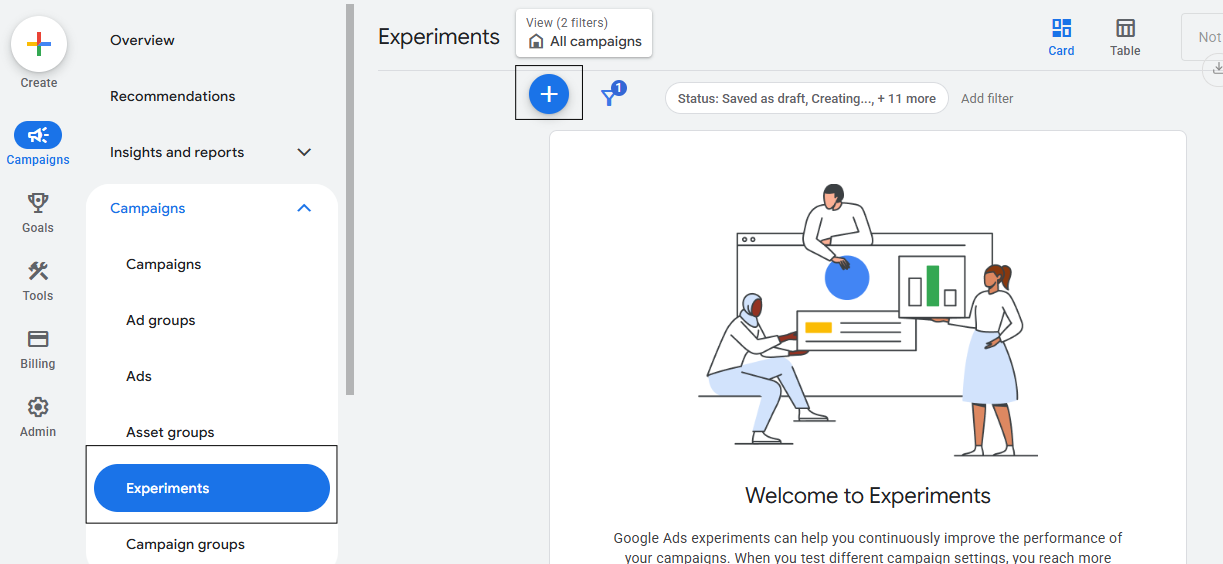
- Define the experiment type, choose a variable to test, and select an existing high-performing campaign to test against.
- Set a 50% traffic/budget split for a balanced test. Determine the duration (recommended 2–4 weeks).
- Ensure proper tracking is in place to measure the experiment’s impact.
- Launch the experiment and monitor regularly for significant results.
- Once the experiment concludes with sufficient data, apply the winning changes to the original campaign.
Here’s a quick tutorial video on how to create an experiment in Google Ads.
Avoiding Common Pitfalls in PPC Ad Writing
Avoiding common pitfalls in PPC ad writing is essential to turning clicks into conversions. Even well-targeted campaigns on platforms like Google Ads and Meta Ads can underperform when messaging is unclear or misaligned. Focus on eliminating these frequent mistakes:
- Writing vague, generic copy that tries to appeal to everyone instead of clearly targeting one specific audience segment with a defined pain point
- Highlighting product features without clearly explaining the real-world benefits or outcomes the customer will experience
- Ignoring the user intent and awareness stage, which leads to messaging that doesn’t match what the prospect is actually looking for
- Making bold promises in the ad that the landing page fails to reinforce, creating friction, and lowering trust
- Launching campaigns without structured A/B testing of headlines, descriptions, hooks, and CTAs to identify what truly drives conversions
AI & PPC Advertising FAQs
What is a PPC Ad copy?
PPC Ad copy is the text in pay-per-click advertisements that online users see. It’s crafted to grab attention, highlight the product or service, and prompt users to click the ad. Effective PPC ad copy is concise and persuasive, often featuring a strong call-to-action to drive conversions. It’s essential for ensuring that potential customers are attracted to the ad and encouraged to learn more about what’s being offered.
What is a PPC ad?
Imagine searching for “Katmai Wilderness Lodge, Alaska” online. At the top of the search results, you might see a paid ad with a headline like “Alaska Bear Lodge – Rates & Details- Packages.” This ad is a PPC ad, designed to attract clicks from users interested in Wilderness Lodges in Alaska. Clicking this ad takes you to the website, where you can explore and reserve your bookings.
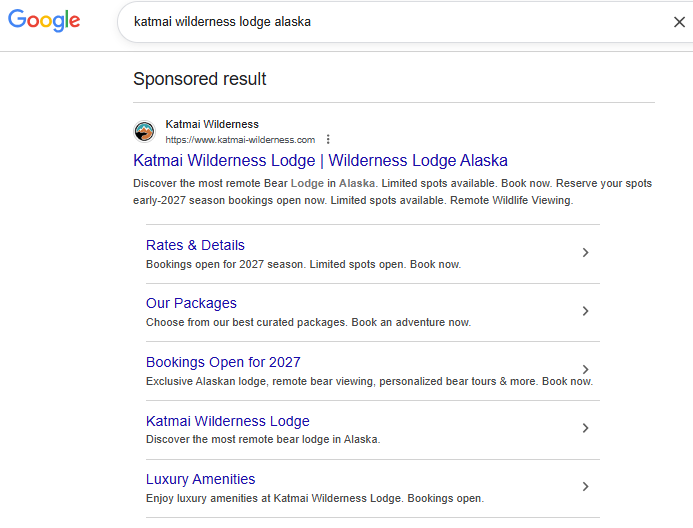
Example of a PPC Search Ad
What is PPC in advertising?
PPC, or pay-per-click, is an online advertising model where advertisers pay a fee each time their ad is clicked. It’s a way of buying visits to your site rather than earning them organically. PPC is commonly used on search engines and social media platforms, allowing businesses to target specific audiences and achieve measurable results. This model can be highly effective for driving traffic and generating leads or sales.
How to write compelling Ad copy for PPC ads?
Crafting compelling PPC ad copy involves understanding your audience’s needs and creating a message that resonates. Start with a strong headline that grabs attention. Use clear, concise language, and focus on the benefits of your product or service. Include a call-to-action that tells users what to do next, like “Shop Now” or “Learn More.” Testing different versions can help determine what works best.
What’s the biggest mistake people make when using ChatGPT for PPC ads?
One common mistake is relying too heavily on ChatGPT without providing clear guidance or context. While ChatGPT can generate creative ideas, it needs specific instructions to align with your brand voice and objectives. Always review and refine the generated content to ensure it meets your advertising goals. Balancing AI-generated content with human insight leads to more effective PPC ad copy.
Strategic Framework for PPC Ads That Drive Real Sales
Writing PPC ad copy that converts requires a blend of creativity, strategy, and technological assistance. By leveraging tools like ChatGPT, you can enhance your keyword strategy, craft compelling headlines, and optimize your campaigns for maximum impact.
As a PPC marketing agency, we don’t just use AI to generate ad copy; we use it strategically. We combine advanced prompt frameworks, platform expertise across Google Ads and Meta Ads, and real performance data to create ads that convert, not just attract clicks. From audience research to continuous A/B testing and landing page alignment, we turn AI-powered ideas into measurable revenue growth.
Not sure how to craft PPC ads with ChatGPT that actually drive leads and sales? Wondering how to test, optimize, and scale AI-generated copy for maximum results? Request a free consultation and let our experts guide your campaigns to higher conversions.

Afreen works as a PPC Manager at ITVibes and holds a Master’s degree in Computer Science Engineering. She enjoys reading books and has a passion for creating compelling ad campaigns, bringing genuine enthusiasm to her work in digital marketing.