
Search used to be simple. You wrote a page, added a few keywords, and hoped Google showed it to the right people. Today, search looks very different. AI-powered results now summarize answers for users before they ever click a website. That shift is why AI overview optimization matters, even if you have never touched SEO before.
If you are a business owner who just wants more visibility, more trust, and more customers, this guide is for you. You do not need to understand algorithms or technical jargon. You just need to know how AI decides which businesses get mentioned and which ones get ignored.
In the sections ahead, you will learn simple, practical ways to help your content show up in AI search results while still doing what matters most: helping real people find clear answers.
Key Takeaways
- AI search is changing how visibility works, but strong SEO fundamentals still matter.
- Human-centered, experience-driven content is more likely to be chosen for AI Overviews and generative answers.
- Clear structure, clean technical SEO, and trustworthy information help AI understand and cite your content.
- External signals like mentions and backlinks strengthen your authority across both traditional and AI-driven search.
- You can measure AI visibility by tracking citations in AI Overviews and generative summaries.
Why AI Optimization Matters for Search Visibility
Search is not just about ranking for keywords anymore. It is shifting toward AI-powered awareness, where Google and other tools pull information from websites to create their own summaries. Featured snippets like AI Overviews and AI-generated answers give businesses new ways to be seen. Instead of scrolling through a long list of links, many people now read the short answer that AI shows first.
This means your content needs to work for both traditional SEO and the new signals AI looks for. When your website is clear, helpful, and easy for AI to understand, you are more likely to appear in these high-visibility spots. Strong content helps AI trust your information and choose it when building answers for users based on the search intent.
How AI Search Differs From Traditional Organic Ranking
Traditional SERPs (search engine results pages) show a list of websites in order. AI search works in a very different way. Instead of ranking ten links, AI tools read information across the web and combine the best parts into one easy-to-read answer. Your website is included when AI chooses to cite your information as part of that answer.
You may show up as a reference or as a highlighted piece of information. This is a new type of visibility, but it does not replace normal SEO. Good structure, helpful content, and a healthy website are still important. AI optimization simply helps your content become the kind of information that AI wants to use and share with others.
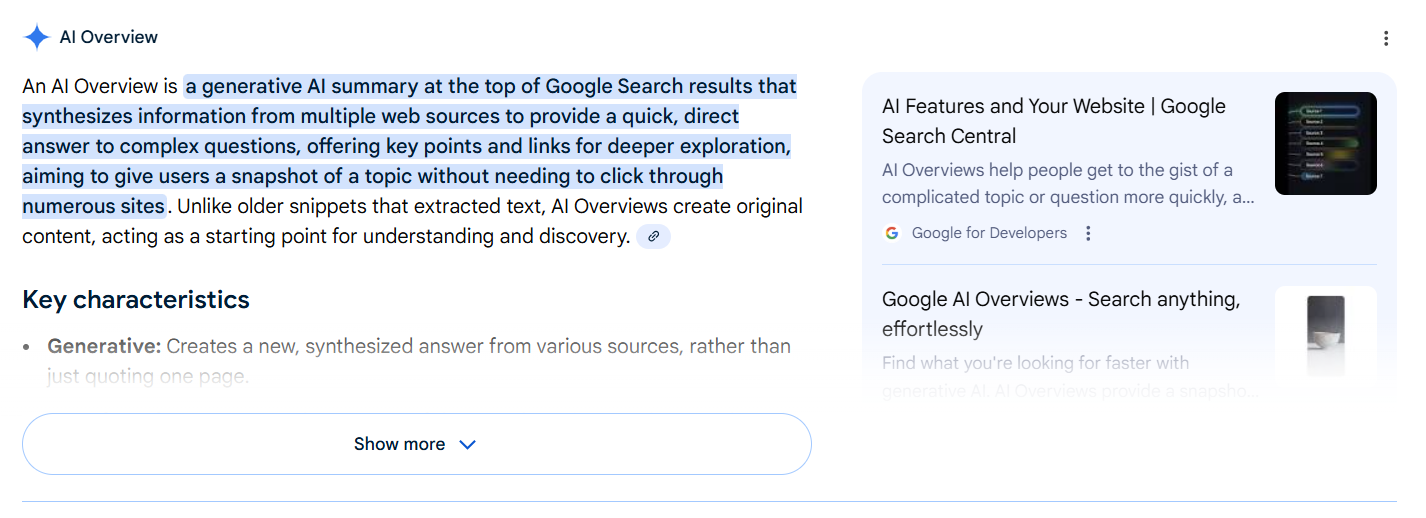
Google AI Overview, 2026
What Google’s John Mueller Recently Said About AI Optimization
Google leaders have been very clear about one thing. The fundamentals of optimization have not changed. John Mueller, a well-known voice from Google’s Search Relations team, has repeatedly emphasized that strong content, clear structure, and user focus still matter most, even as AI plays a bigger role in search.
Mueller has also warned business owners to be careful about flashy trends and new terminology. In a recent discussion, he cautioned against rushing toward new AI-focused buzzwords that promise quick wins.
As he put it, “The higher the urgency, and the stronger the push of new AI optimization acronyms, the more likely they’re just making spam and scamming.” (PPC Land). His message is simple. Real visibility does not come from shortcuts or fear-driven tactics.
SEO for AI Is Still SEO
According to Search Engine Journal, Google’s Search Relations team, including Mueller, has reinforced that optimizing for AI search does not require a brand-new discipline. The goal has not shifted from helping users to chasing AI systems. High-quality, useful content created for real people remains the foundation, whether it appears in traditional search results or AI-generated summaries.
Long-term success comes from doing the basics well. Clear answers, trustworthy information, and a good user experience help your site perform across both classic search and AI-driven results. Instead of following buzzwords, businesses that focus on strong fundamentals are the ones most likely to stay visible as search continues to evolve.
Strategies to Increase Search Visibility in LLM Responses
Have you ever wondered how tools like ChatGPT, Google Gemini, Perplexity, and Claude decide which businesses show up in their answers? As a digital marketing agency, we see this shift firsthand. These large language models do not just look at rankings. They analyze clarity, credibility, and context before deciding which sources to include.
For many users, the AI-generated response becomes their first interaction with a brand. The changes needed to improve visibility in LLM responses are not out of reach, but they do require the right guidance. This is where an experienced digital marketing agency plays a key role.
Our team helps business owners and internal marketing teams implement these improvements without needing to understand the technical side of AI or search. By aligning proven SEO fundamentals with how modern AI systems interpret content, agencies can help brands stay visible as search continues to evolve.
Tip 1: Create Unique, Non-Commodity Content
AI models are far less likely to reference content that blends into the crowd. If your page simply repeats common advice found on dozens of other sites, there is no reason for an AI system to select your version over anyone else’s.
To stand out, focus your content on what you know that others do not. Share unique stories, explain real-world scenarios, add data from your own experience, or break down a complex topic in simple terms. These elements give AI something valuable to work with and increase your chances of being cited.
Pro Tip: Add a short “What This Means for You” section at the end of important topics. AI tools often pull clear explanations and summaries when creating answers.
Tip 2: Support Content With Evidence and Authority Signals
AI systems look for information they can trust. Adding supporting elements like research, expert insights, or real examples helps signal that your content is reliable and grounded in fact. The stronger your evidence, the more likely AI tools are to pull your information into summaries and answer boxes.
Clear structure also matters. When each section directly answers a specific search query, AI can quickly identify what the content is about and extract the right details.
What to include to strengthen credibility and structure:
- Research-backed statements
- Links or references to credible sources
- Quotes or insights from subject-matter experts
- Real-world examples or case studies
- Q&A sections that directly answer common questions
- Numbered explanations to break down complex points
- Summarized or key points bullet points
- Short evidence-based callout boxes for key facts
Tip 3: Ensure Technical SEO and Crawlability
Your content cannot show up in AI responses unless search engines can crawl and index it. Meeting basic technical SEO requirements gives AI systems clear access to your pages. This includes having a simple site structure, clean HTML, and clear headings that show what each page is about.
According to Google for Developers, well-organized pages help search systems understand your content faster and more accurately. Good crawlability is one of the simplest ways to improve your visibility across both search and AI features.
We recommend checking your robots.txt file and XML sitemap regularly. Even one accidental block in these files can prevent important pages from being discovered.
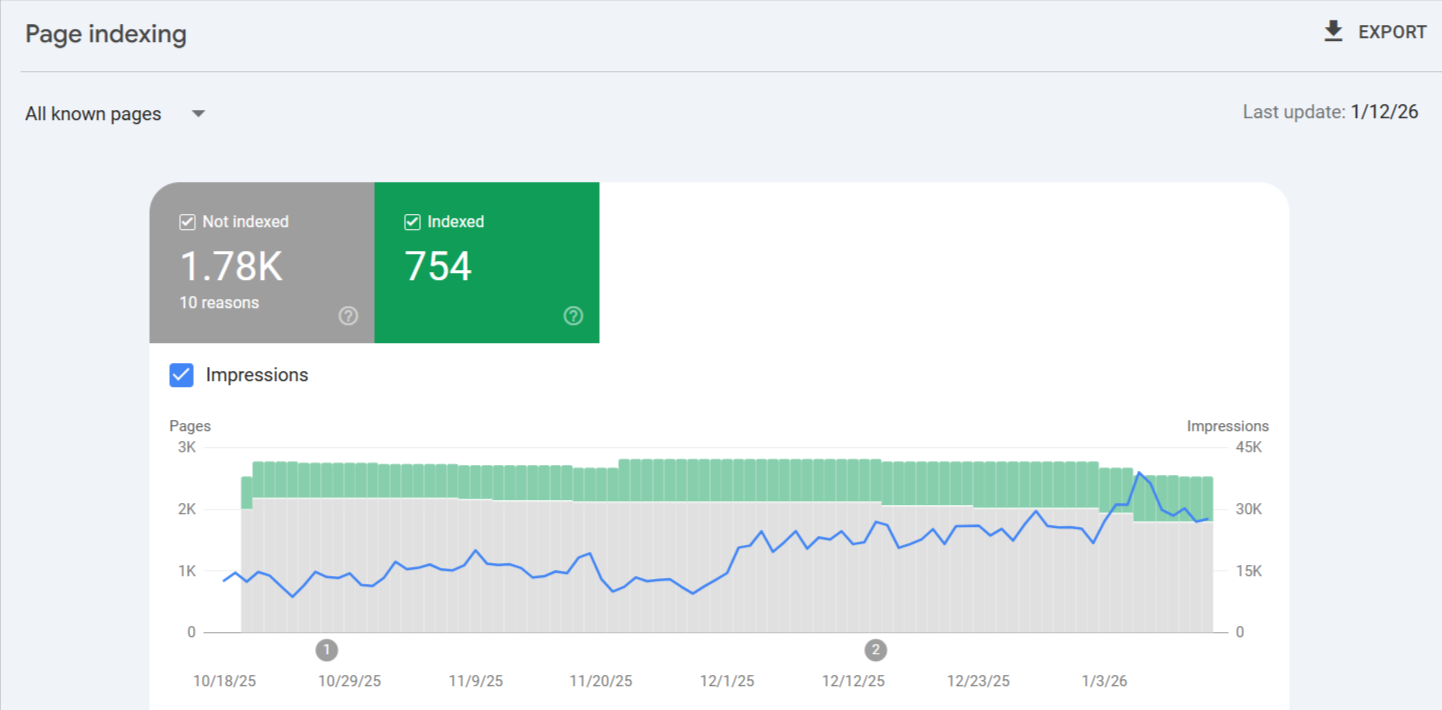
Google Search Console, 2026
Tip 4: Provide Great Page Experiences for Users
Search engines and AI tools both prioritize pages that offer a smooth, helpful experience. Fast load times, mobile-friendly layouts, and clear navigation help users find what they need quickly. When people stay on your site longer and interact with your content, it sends positive signals that support higher visibility. Google for Developers highlights user experience as an important factor for both traditional and AI-driven search outcomes.
Pro Tip: Test your site on a mobile device once a month. If you have trouble finding a button, reading text, or navigating a page, AI tools will likely struggle to understand it too.
Tip 5: Optimize Content With Clear Sections, Questions, and Answers
AI models understand pages more effectively when the content is divided into logical sections. Using headings, short paragraphs, lists, and Q and A formats helps AI identify what each part of the page is about. This type of semantic organization also boosts relevance for long-tail queries, since AI can match specific answers to specific questions. The clearer your structure is, the easier it becomes for AI to pull your content into summaries.
Pro Tip: Add a “People Also Ask” style mini-section to your pages. AI tools often look for question-and-answer formats when generating responses.
Tip 6: Leverage Rich Media and Contextual Signals
AI systems benefit from more than just text. Images, charts, videos, and captions add valuable context that helps AI understand your message. Rich media also improves engagement, which can indirectly support visibility across search features.
As AI search becomes more multimodal, using a variety of content types helps ensure your information can be used in different formats. Visuals can explain complex ideas more clearly, making your content more useful and more likely to be included in AI responses.
Tip 7: Earn Mentions and Citations Across Platforms
External mentions play a major role in boosting visibility. When your brand appears in forums, blogs, industry discussions, review platforms, or social conversations, AI systems take note. These signals help models understand that people engage with your business beyond your website.
Not all of these mentions need to be links. Even simple brand names, topic mentions, or contextual references help AI detect authority. Over time, this makes your content more appealing for AI-generated answers. A single helpful comment in a popular forum or group can create long-lasting visibility signals.
Tip 8: Encourage Authoritative Linking and Partnerships
Traditional backlinks still matter and continue to influence how search engines and AI systems judge trust. Links from respected websites signal that your content is valuable and credible. Partnerships with industry experts, associations, or well-known platforms can strengthen these signals and support visibility across different ranking environments.
A balanced SEO strategy that blends backlinks, mentions, and citations helps AI models confirm your authority. This includes both internal linking and external linking to authoritative domains.
Pro Tip: Create resources worth linking to, such as guides, tools, checklists, or research summaries. High-value content naturally attracts quality links over time.
Tip 9: Track How Content Appears in AI Answers
To improve visibility in AI responses, you need to know when and where your content appears. Several tools now show whether your pages are being cited in AI Overviews, generative summaries, or conversational search outputs. Tracking these placements helps you understand which content performs well and why.
When you see strong results, you can expand on those topics. When something is missing, you can refine or enhance the content to make it more useful for AI systems.
We recommend reviewing your top-performing content monthly. Pages that show up in AI features often share patterns you can replicate across your site.
Tip 10: Avoid Chasing Buzzwords & Focus on Measurable Wins
The rise of AI search has created many new acronyms and “fast-fix” tactics. Most of them provide little real value. Google’s search team has even warned that trendy optimization terms often do more harm than good. Instead of chasing buzzwords, focus on strategies that actually improve performance.
Common hype terms you can ignore include phrases like “algorithm hacks,” “AI tricking,” “instant ranking boosts,” “secret AI levers,” or “GPT-optimized content systems.” Bad tactics often look like keyword stuffing for AI summaries, auto-spinning long pages with AI tools, overusing generic schema markups, bloating pages with unnecessary FAQs, or publishing dozens of thin AI-generated articles to “feed the algorithm.” These shortcuts rarely help and can actually reduce trust and visibility.
Measurable wins come from increased citations in AI features, better engagement on your pages, and overall improvement in search visibility. Set simple visibility goals, such as increasing AI citations or improving time on page. These metrics help you stay focused on real progress, not hype.
AI Optimization Management Overview
| Tip | Most Important? | What to Do | Why It Matters (Value) |
| 1. Create unique, non-commodity content | Yes | Add original insights, real examples, data, experience | AI prefers content that stands out; unique value increases citation likelihood |
| 2. Support content with evidence & authority signals | Yes | Add sources, stats, quotes, expert insights | Strong trust signals increase AI confidence in your content |
| 3. Ensure technical SEO & crawlability | Yes | Fix indexing issues, improve structure, check robots.txt and sitemap | AI cannot use your content if it cannot access it |
| 4. Improve page experience (speed, mobile, clarity) | Helpful | Enhance load times, readability, navigation | Better UX increases engagement signals AI uses for selection |
| 5. Use clear structure with questions & answers | Yes | Use headings, Q&A blocks, concise answers | AI extracts structured answers more accurately and consistently |
| 6. Use rich media & contextual signals | Helpful | Add images, charts, alt text, captions | Multimodal AI uses visuals to understand context and relevance |
| 7. Earn mentions & citations across platforms | Yes | Encourage brand mentions in forums, blogs, reviews | External signals strengthen topical authority and brand trust |
| 8. Build authoritative links & partnerships | Helpful | Earn backlinks from credible sites | Reinforces authority signals used by AI and search engines |
| 9. Track how content appears in AI answers | Helpful | Monitor AI citations, keywords, placement patterns | Helps you understand what’s working and where to optimize further |
| 10. Avoid chasing buzzwords and focus on real wins | Yes | Prioritize fundamentals, measurable improvements | Prevents wasted effort and aligns with Google’s guidance against hype |
AI Optimization and Search Visibility FAQs
What’s the difference between SEO and AI optimization?
Traditional SEO focuses on ranking your website in search results using keywords, links, and on-page structure. AI optimization is about making your content clear and trustworthy enough for AI systems to include it in answer-style results like AI Overviews or generative summaries. The two overlap because AI still relies on strong SEO signals to understand and evaluate your content. When you follow SEO fundamentals, you naturally support AI visibility as well.
Do structured data and schema boost AI visibility?
Structured data helps search engines understand context, which can improve how your content is interpreted and displayed. While schema supports clarity, it does not guarantee that AI systems will cite your content in summaries or overviews. AI models still prioritize high-quality, helpful, and well-organized content above everything else. Schema is a helpful enhancement, but it cannot replace strong content.
Should I create separate content for AI search?
No, you do not need separate pages or special content for AI features. Instead, focus on creating deeper, more valuable information that clearly answers user questions. When your content is useful and easy for people to understand, AI tools can interpret it more effectively. High-quality human-centered content naturally performs well in both organic search and AI-generated results.
How do I measure AI search visibility?
You can track AI visibility by monitoring how often your content appears in AI Overviews, generative answer boxes, and other AI-driven summaries. Several analytics tools now highlight when your pages are cited or referenced in these features. Reviewing these placements helps you see which topics and formats perform best. Over time, you can adjust your strategy based on what AI tools tend to use.
Is traditional SEO still relevant?
Yes, traditional SEO remains the foundation for all search visibility. Google and industry leaders consistently state that strong technical SEO, helpful content, and good user experience are still the most important factors. AI systems depend on these same fundamentals to understand and trust your pages. When you invest in solid SEO, you support both classic rankings and AI-generated responses.
About Our SEO & AI Optimization Team
This article was written by our digital marketing specialists who manage SEO and AI visibility strategies for businesses across Texas and the U.S. Our team works hands-on with AI Overviews, generative search features, and large language model visibility tools to help companies stay competitive as search evolves. With years of experience in technical SEO, content strategy, and AI-driven optimization, we translate complex search trends into simple, practical solutions businesses can apply right away.

Balancing Classic SEO With AI Optimization Strategies
AI search is reshaping how people find information, but the core principles of SEO remain just as important as ever. High-quality, human-centered content, strong technical performance, clear structure, and credible external signals all work together to help your brand appear in both traditional search results and AI-powered summaries. When you focus on clarity, expertise, and user experience, your visibility improves across every search format.
As a digital marketing agency, we help businesses navigate the shift toward AI-driven search with strategies that are practical, ethical, and rooted in long-term growth. Our team blends classic SEO best practices with modern AI visibility techniques to ensure your content is easy for both users and AI systems to understand. Whether you are trying to strengthen your website, improve your search performance, or prepare for the future of AI-powered discovery, we guide you step by step with a strategy that fits your goals.
Are you ready to see how these strategies can boost your search visibility and help more customers find you? Request a quote today and let our team build a tailored SEO and AI optimization plan designed for real, measurable results.

Ashlee Visser is the Content Manager at ITVibes, Inc. She holds a B.A. in Humanities from Thomas Edison State University. With a strong focus on organization, she excels in content management and website writing. Ashlee’s passion for writing is evident in every project she undertakes. When she’s not busy managing content, she enjoys spending time with her husband and their growing family.